
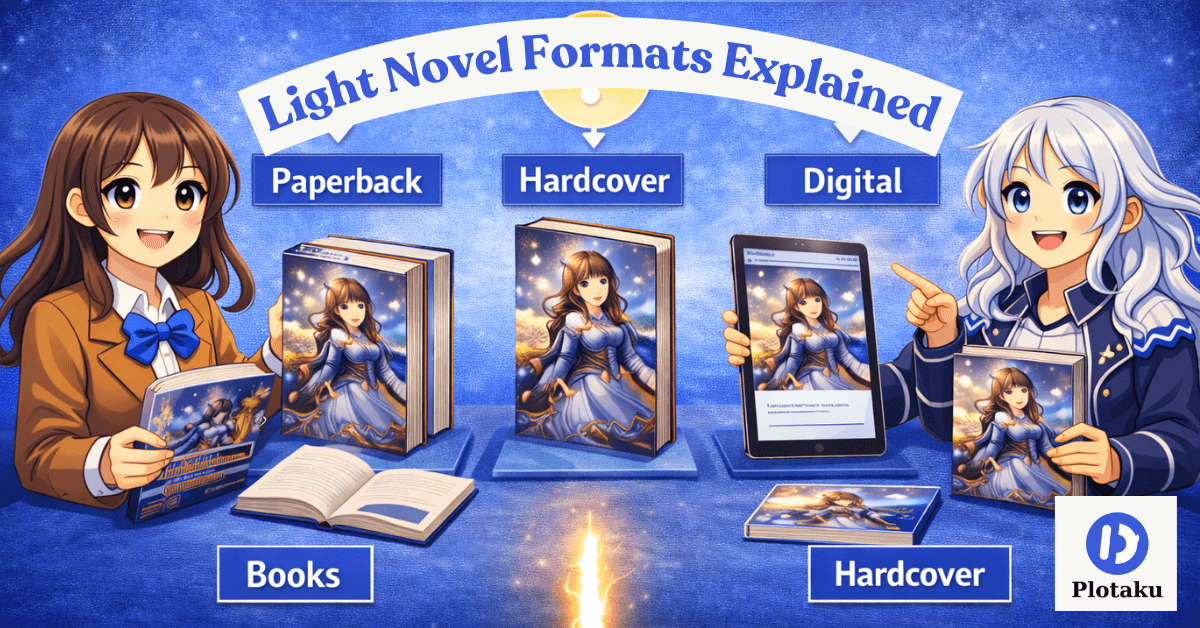

If you’re new to light novels, one of the first things that can feel genuinely confusing isn’t what to read—it’s understanding how light novel formats actually work and how they’re sold.
Paperback? Digital? Those manga-looking books that aren’t actually manga? Omnibus editions? What even is that?
If you’ve ever thought, “I just want to read—why is this so complicated?” trust me, you’re not alone. Understanding light novel formats shouldn’t feel like solving a puzzle.
This beginner-friendly guide breaks down all the major light novel formats so you can choose the right one with confidence and avoid those common beginner mistakes that trip everyone up at first.
If you are a complete beginner to light novels, then you should check out Plotaku’s “Start Here” section, where we help you go from beginner – to pro in 5 easy steps.
What Is a Light Novel? (Quick Refresher)
Before we dive into light novel formats, let’s do a quick refresh on what light novels actually are.
A light novel is a prose novel—meaning it’s primarily text-based storytelling—that typically includes anime-style illustrations sprinkled throughout.
Most light novels:
- Are around 200–300 pages per volume
- Are released in numbered volumes (Volume 1, Volume 2, etc.)
- Feature gorgeous illustrations throughout the book
- Serve as the original source material for many popular anime and manga
📌 Important note: If an anime is based on a light novel, the light novel version almost always goes way beyond what the anime adaptation covers. That’s why so many fans eventually pick up the novels.
The Main Light Novel Formats (Explained Simply)
Let’s break down each format so you know exactly what you’re getting when you buy or download a light novel.
1. Physical Light Novels (Paperback)
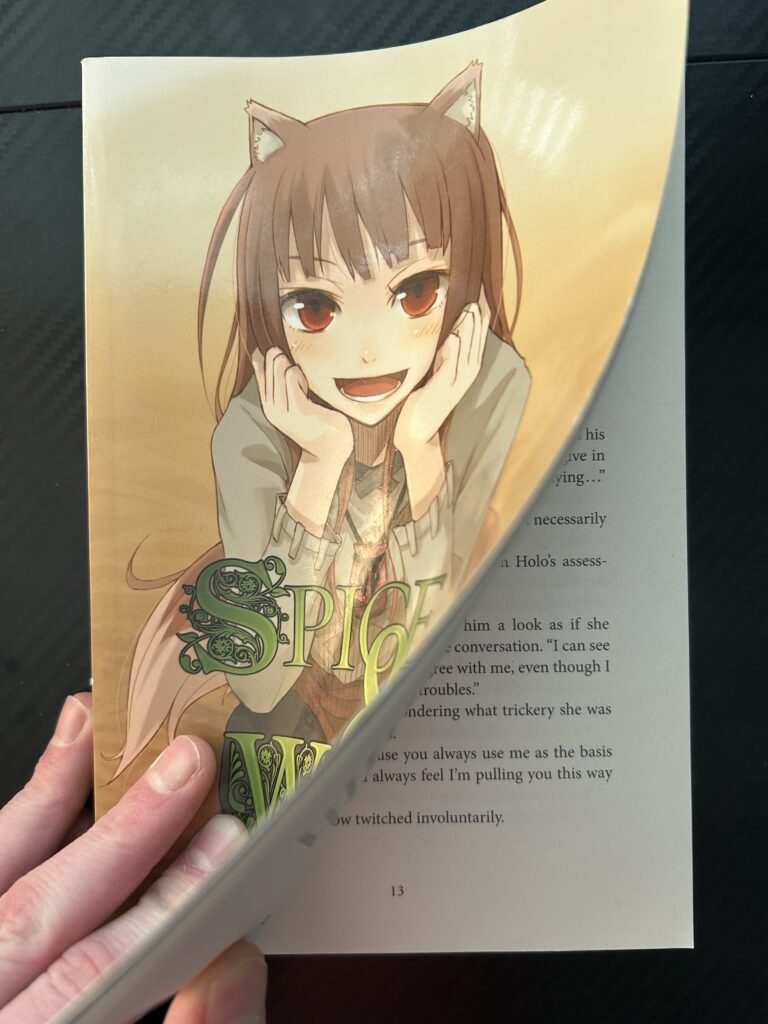
This is what most people picture when they think about light novel formats—a real, physical book you can hold in your hands.
What they are:
- Standard paperback books (similar size to YA novels)
- Text-focused with occasional anime-style illustrations
- Gorgeous manga-style cover art
- Sold one volume at a time
Good choice if you:
- Love holding a physical book while you read
- Want to build a visible collection on your shelf
- Prefer reading without staring at screens
- Enjoy the ritual of flipping actual pages
Beginner tip:
Always start with Volume 1. Don’t grab spin-offs, side stories, or random middle volumes until you’re familiar with the main series—you’ll just confuse yourself.
2. Digital Light Novels (eBooks)
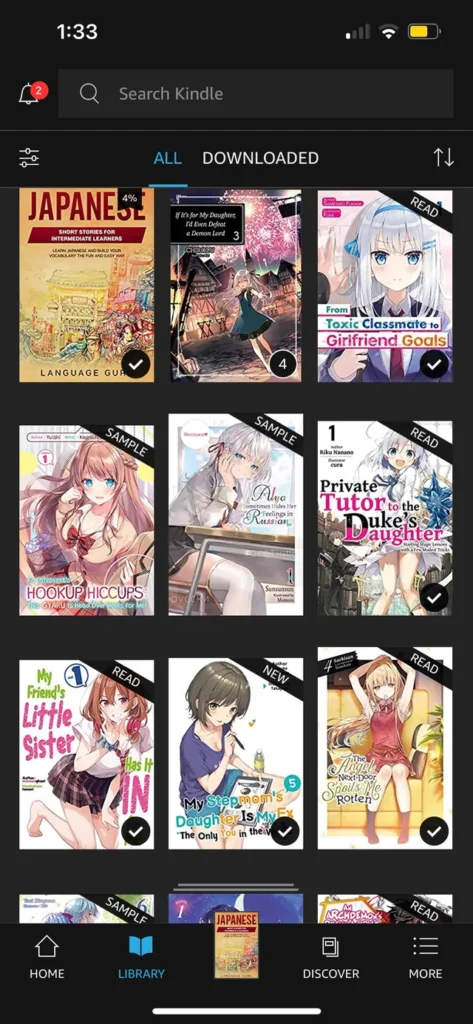
Digital light novels contain the exact same content as physical versions—just in eBook form. No missing content, no compromises.
Common platforms for digital light novel formats:
Good choice if you:
- Want instant access (start reading in seconds)
- Are working with a tighter budget
- Read on your phone, tablet, or e-reader
- Don’t have shelf space or move around a lot
Why beginners often start with digital light novel formats:
- Lower cost – Usually $5-8 vs $12-15 for physical
- Frequent sales – Digital platforms run discounts constantly
- No shelf space required – Your entire library fits in your pocket
- Adjustable text size – Customize for comfort during long reading sessions
Many readers start with digital formats and later grab physical copies of their absolute favorite series. That’s a totally valid strategy.
3. Omnibus Editions
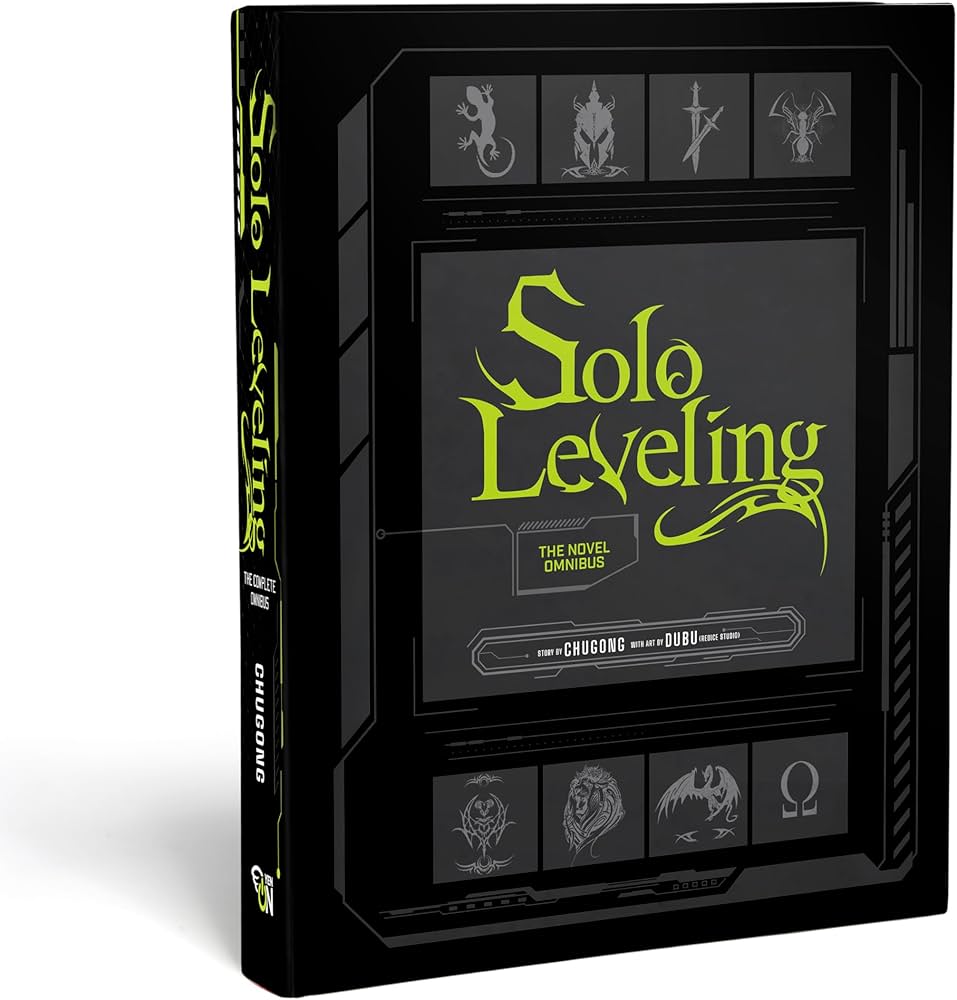
An omnibus edition is when publishers combine multiple volumes of a light novel into one larger book.
Example:
Instead of buying Volumes 1, 2, and 3 separately, you get all three in a single omnibus edition.
Pros:
- Better value per volume – Usually cheaper than buying individually
- Convenient for binge reading – No need to grab the next book, just keep going
- Fewer books to store – Takes up less shelf space
Cons:
- Heavier and bulkier – Can be awkward to hold for long sessions
- Not available for every series – Only popular titles get omnibus releases
- Less flexibility – You’re committing to multiple volumes at once
Beginner note:
Omnibus editions are fantastic after you know you love a series—but they’re not always ideal for trying something new. Start with Volume 1 first to test the waters.
4. Light Novel vs Manga (Important Format Difference)
This is hands-down one of the most common beginner mix-ups when it comes to light novel formats.
| Light Novel | Manga |
| Mostly text with some illustrations | Mostly illustrations with some text |
| Prose storytelling (like a regular novel) | Visual storytelling through comic panels |
| Deep inner thoughts and worldbuilding | Visual expressions and action |
| Often the original source material | Often an adaptation of the source |
👉 Bottom line: If you want more detail, deeper worldbuilding, character thoughts, and complete story content, choose the light novel format over manga every time.
5. English vs Japanese Editions
When shopping for light novel formats, you’ll sometimes see both English and Japanese releases available.
English editions:
- Fully professionally translated
- Released by licensed publishers (Yen Press, Seven Seas, J-Novel Club, etc.)
- Beginner-safe and easy to read
- Same story, just in English
Japanese editions:
- No translation (original Japanese text)
- Intended for fluent Japanese readers
- Usually cheaper if you can read Japanese
- Not beginner-friendly unless you’re studying the language
📌 If you’re new to light novels: Always choose the English edition. Don’t make this harder on yourself than it needs to be.
Digital vs Physical Light Novel Formats: Which Should Beginners Choose?
There’s genuinely no wrong choice here—just what fits your personal reading style and situation.
📱 Go digital if you want:
✅ Lower upfront cost and frequent sales
✅ Instant access (no shipping waits)
✅ Easy experimentation with different series
✅ Reading on the go without carrying books
📚 Go physical if you want:
✅ A collectible library you can display
✅ A traditional, screen-free reading experience
✅ Something tangible you can lend to friends
✅ That satisfying “book in hand” feeling
Most beginners find digital light novel formats easier to start with—and that’s perfectly okay. You can always switch to physical later once you know what you love.
Part of the Plotaku Start Here Series
This guide is part of Plotaku’s Start Here: Light Novels for Beginners hub—a complete step-by-step path designed to help new readers start reading with confidence and zero confusion.
If you’re brand new to light novels, the full Start Here guide covers everything:
👉 What Is a Light Novel? A Complete Guide
👉 Light Novel vs. Manga vs. Web Novel
👉 How to Pick Your First Light Novel Series
👉 Digital vs Physical Light Novels
👉 Best Apps for Reading Light Novels
👉 Best Light Novels for Beginners
👉Start Here: Light Novels for Beginners – Your complete beginner roadmap
Want Personalized Reading Recommendations?
Understanding light novel formats is just the beginning—choosing the right series for your tastes is what makes reading actually stick.
Join the Plotaku Newsletter and get:
- Beginner-friendly recommendations tailored to your interests
- “If you liked this anime, read this light novel” guides
- New release alerts and industry news without the noise
- Honest reviews to help you pick your next read
No spam. No fluff. Just helpful guidance for your light novel journey.
Sign up for the Plotaku Newsletter
Final Thoughts: Don’t Stress the Light Novel Formats
Here’s the truth: The most important thing isn’t choosing the “perfect” light novel format—it’s just starting.
Light novel formats are flexible. You can:
- Read digitally now, collect physically later
- Switch between formats based on your mood
- Experiment and explore at your own pace
- Change your mind as many times as you want
Once you understand the basics of light novel formats, everything gets way easier. And honestly? After you’re a few volumes into a series you love, the format becomes the last thing you’re thinking about.
You’re ready to read with confidence now. Go grab that first volume—your next favorite series is waiting. 📖✨
2 Responses